Focus Isn’t a Trait. Grit Isn’t Hustle. (And Candor Isn’t Conflict.)
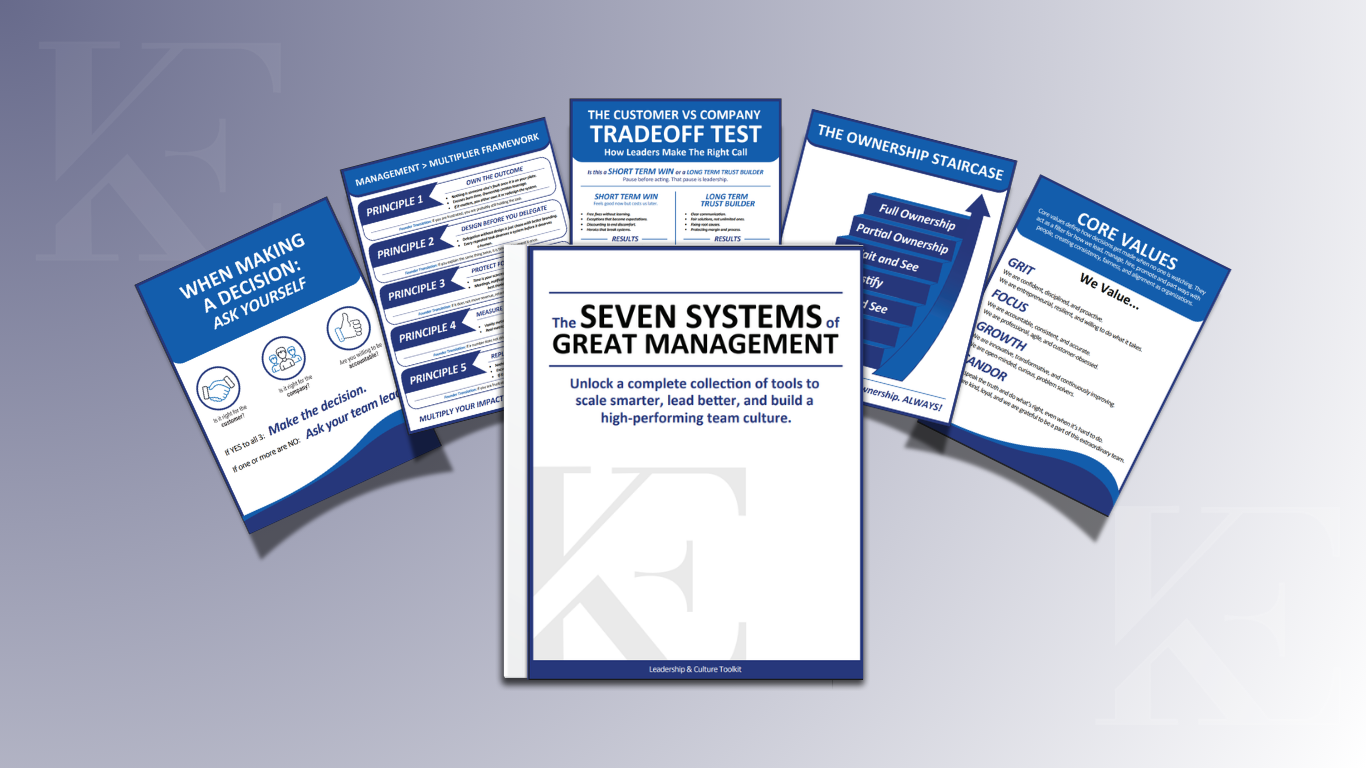
Dec 18, 2025Building a company that lasts comes from a set of core values that scale, not because they sound good on a wall, but because they shape real decisions when the stakes are high. Grit, growth, focus and candor are behaviors, not slogans. They are the quiet forces behind every tough call, every sprint, every honest conversation, and every leap forward. These are the values that built TerraSlate, and the ones that will carry us through the next chapter.
Today, I am writing about each of these values, the behaviors behind them, and how they show up in our business every day, in hopes that this helps you see how to translate your own values into daily behaviors that strengthen your team and scale your business.
Prefer to watch instead of read? Here’s the video version of this article.
Core Value: Grit
The Idea
When COVID hit, everything changed. Our two biggest clients went silent in the same week. Invoices vanished. Forecasts collapsed. Like every other founder I know, I stared at the wall thinking, “Now what?”
We called an emergency team meeting that Friday. No sugar-coating. Just facts and decisions. We did not panic. We did not wait. We sprinted.
That weekend, we launched five new product options based on customer demand. We pivoted our messaging. We restructured operations and contacted every existing customer with a real update, not corporate jargon. We even prototyped a new product use case we had never tried before on the request of a customer with a harebrained. We loved it.
We shipped more meaningful work in one week than most teams do in a month. We did this because we were willing to endure the discomfort, uncertainty, and fatigue that come with grit.
Grit is not just about enduring pain. It is about choosing progress in spite of it. Choosing to move forward when standing still is more comfortable.
The Insight
The truth about grit is empowering. It is not about working harder or logging longer hours. Grit is not effort alone. It is a commitment to delivering quality work under pressure.
Grit is what kicks in when your plan stops working. It is what keeps you moving when no one is watching. It is not about how tough you talk. It is about whether you show up when things get tough.
Here is the secret: grit compounds. The more you choose action when it is hard, the easier it gets to do it again.
Most people think they will rise to the occasion when the time comes. But we never rise to the occasion. We fall to the level of our preparation and our habits.
The Impact: The GRIT System
G - Get Back Up: You will fall. You will miss. You will misfire. That is not the test. The test is what you do after.
R - Run Into the Fire: Most people avoid pain and discomfort. Leaders sprint toward it. The faster you face the hard thing, the faster you win.
I - Iterate Fast: Make the next move. Do not wait for the perfect one. Speed beats perfection every time. Learn by doing.
T - Turn Pain Into Power: Use the setback as data. If you are willing to extract it, every failure has fuel in it.
The Bonus
Grit is something you build like a muscle, one rep at a time. The only way to build it is to step into situations that require it. Look around your current environment. Where are you playing it safe? Where are you waiting for more information instead of making a move?
That is your invitation to grit. Take it.
Core Value: Focus
The Idea
In TerraSlate’s second year, I was invited to speak at an innovation summit. It was the kind of event entrepreneurs dream about. High-profile audience. A room full of investors. A chance to share our story and potentially accelerate growth with some well-placed attention.
But that week, things were on fire internally. Two vendors had dropped the ball. We were chasing down proofs. A few orders were running dangerously close to deadline, and my inbox had become a to-do list I had not agreed to.
So I passed on the summit. Politely, quietly, and probably confusing to a few peers who thought it was a no-brainer opportunity.
Instead, I walked into the production floor and spent the next 72 hours side by side with the team. We made the calls. We fixed the issues. We got back ahead of schedule.
Focus is not about saying yes to good things. It is about saying no to almost everything. Even when it looks exciting. Even when it flatters your ego. Especially when it might pull your attention off what matters most.
The Insight
What people often overlook about focus is that it is not a fixed trait at all, it is something you can build. Focus is not a natural ability, it is a designed system.
The power of focus comes from intentional choices, not from trying harder. You decide what not to do. You design conditions that give distractions no room to breathe, and you protect your time like it’s money, because it is.
The beauty of staying focused is that it helps you recognize which opportunities truly serve your momentum. It is rarely the bad opportunities that derail you. It is the good ones that come at the wrong time, or the ones that pull you away from what you have already committed to.
At its best, focus is clarity in motion, alignment, and the kind of prioritization that protects what matters most.
The Impact: The FOCUS Method
F - Filter Fast: The ability to make decisions quickly and say no fast is a skill that sets the best apart. Most of what crosses your desk or inbox is noise.
O - Own the Priorities: Each day, define your top three. If you finish those, the day is a win. Everything else is optional.
C - Close Loops: Unfinished tasks cost more than time. They cost energy and clarity. Do not let things dangle. Decide, do, or delete.
U - Unplug to Think: Deep thinking is not a luxury. It is leverage. Block time to plan, reflect, and make strategic decisions.
S - Set a Daily Reset: Recalibrate every 24 hours. What worked, what did not, and what needs to shift tomorrow. A feedback loop makes focus sustainable.
The Bonus
Busy people are often the least focused. Activity is not the same as productivity. Focused leaders move more slowly at first, but finish faster with better results.
Ask yourself this: If you only got three things done this week, what would make everything else easier or unnecessary?
Then do only that. Focus starts with clarity. But it is enforced with courage.
Core Value: Growth
The Idea
One of the best reminders of what real growth looks like came from a team member who joined TerraSlate in a support role. No big title. No advanced degree. Just hunger, curiosity, and a willingness to ask good questions.
Over time, he started spotting problems before they were raised. He volunteered for cross-functional projects. He offered suggestions that were often better than the ones we had considered.
Twelve months later, he was managing a team. Today, he leads major initiatives, not because it was part of a formal plan, but because he earned it through effort, insight, and an unwavering commitment to his own growth.
That is what growth really is. Not flashy, but unmistakable. When someone creates more value than their title implies, you do not hold them back, you adjust the title to match the contribution.
The Insight
Real growth is one of the most powerful forces within any company, even though it is often treated like a buzzword. True growth has a cost.
It asks you to face feedback, stretch your capacity, and step into work you are not fully ready for and rise into it anyway.
Most people say they want to grow, until growth starts to feel like discomfort. That is usually when they retreat.
But the people who grow the fastest are the ones who embrace that discomfort, not as a threat, but as a teacher.
The Impact: The GROW Model
G - Get Feedback Weekly: Ask for it. Do not wait. The faster you get input, the faster you improve.
R - Run Experiments: Try something new every week. Keep your learning muscle activated.
O - Own Mistakes Publicly: Normalize learning in the open. Do not hide your missteps. Use them as teaching moments.
W - Win Through Iteration: Get better in cycles. Small adjustments, consistently applied, lead to massive progress.
The Bonus
The greatest opportunity in any career is not avoiding mistakes, it is refusing to stay the same.
If you want to grow, you have to move toward the edge of your competence. You have to take on work you do not fully know how to do yet.
That is the real cost of growth, and it is always worth it.
Core Value: Candor
The Idea
I once made a hire based on credentials. The resume checked every box. Top schools. Fortune 500 background. A strong interview. All green lights.
Three weeks in, something felt off. Deadlines slipped. Team dynamics shifted. Energy dropped. I got the same feedback from three different departments: “This is not working.”
The easy choice would have been to wait. Give it more time. Hope things would adjust on their own. After all, I love rooting for people.
What I have learned, though, is that honesty and transparency, rather than waiting for problems to fix themselves, are what bring alignment back into place.
So I pulled the team member aside and said, “We need to talk, and this will not be easy.” I laid out the facts, asked questions, and gave space. He was gracious. We both knew.
We ended the relationship the next day. Clean, respectful, honest.
At the next team meeting, the tension was gone. The energy snapped back, and the team was reminded of something essential, which is that we do not let things fester here.
The Insight
Candor is one of the greatest gifts a team can practice. It is not conflict, and it is not confrontation, it is clarity. It is the truth delivered early. In most teams, it is in short supply.
Many people delay hard conversations because they want to be liked or fear hurting someone’s feelings. Yet avoiding the truth never protects anyone. It only slows everyone down.
The strongest cultures do not avoid problems, they surface them quickly. They face them together, and they solve them without blame.
The Impact: The CANDOR Code
C - Clear, Not Clever: Do not sugarcoat or talk around the point. Be direct and respectful.
A - Assume Good Intent: Come into the conversation believing the other person wants to do the right thing.
N - Name the Issue: Be specific. Name the behavior, not the person.
D - Do It Early: The longer you wait, the more damage is done. Say it now.
O - Own Your Role: Be open to your own part in the breakdown. Feedback goes both ways.
R - Repair and Reconnect: End the conversation with alignment. Candor should build trust, not erode it.
The Bonus
Candor is a skill, not a personality type. You can learn it. You can practice it. The more you do, the stronger your culture becomes.
If you are avoiding a conversation right now, ask yourself this: What would a world-class leader do?
Then do that.
Conclusion
Growing a company that endures is not about slogans, posters, or aspirational language. It is about the behaviors we choose in the moments that matter most.
Grit, growth, focus and candor are not abstract ideals, they are daily practices that shape our decisions, strengthen our culture, and determine how we show up when the pressure is high. When we protect our attention, persist through adversity, speak truth early, and step into the stretch of growth, we create a business that is not only stronger but scalable.
These values built TerraSlate, and they remain the blueprint for everything we are creating next. They have carried us from a tiny company to one that ships to every state every day, and that has over 100,000 customers in 130 countries around the world.
My hope is that by seeing how these values show up in our work every day, you can translate your own values into clear, consistent behaviors that strengthen your team and help your business grow with intention.