


“Kyle's approach to building a high-margin business changed everything for me.
In a few months, I went from constantly firefighting to running a company that operates smoothly without me. The systems and mindset he teaches are game changers.”
– Program graduate

“This gave me a language and system for culture.
Within 2 weeks, my managers started coaching with clarity instead of tiptoeing. Meetings got faster. Drama went down.”
– Founder, SAAS business

"Before joining this program, I felt like a hamster on a wheel;
every day I reacted to fires without making progress. The systems and strategies Kyle teaches have given me breathing room and a sustainable business that runs smoothly even when I'm at the beach. My profits are up, my stress is down, and I'm enjoying life again."
– Satisfied founder
The Reality of Leadership
Nobody Teaches You What Management Actually Feels Like
Most people step into leadership because they’re capable, ambitious, and trusted to produce results.
Very few are prepared for the psychological weight that comes with becoming responsible for the performance, trust, communication, and emotional dynamics of other people.
You learn how to scale companies, optimize systems, improve performance, and drive results.
Then, eventually, you inherit the part of the business nobody fully prepares you for: people.
Not in theory, but in practice.
The emotional complexity of leadership. The conversations that sit unresolved for too long. The high performer quietly disengaging. The tension no one addresses directly until it begins affecting trust, morale, and execution.
Most managers are operating inside relational complexity with almost no practical framework for navigating it well.
So they default to:
Not because they’re incapable.
Because modern management requires a skill set that most ambitious people were never formally taught.
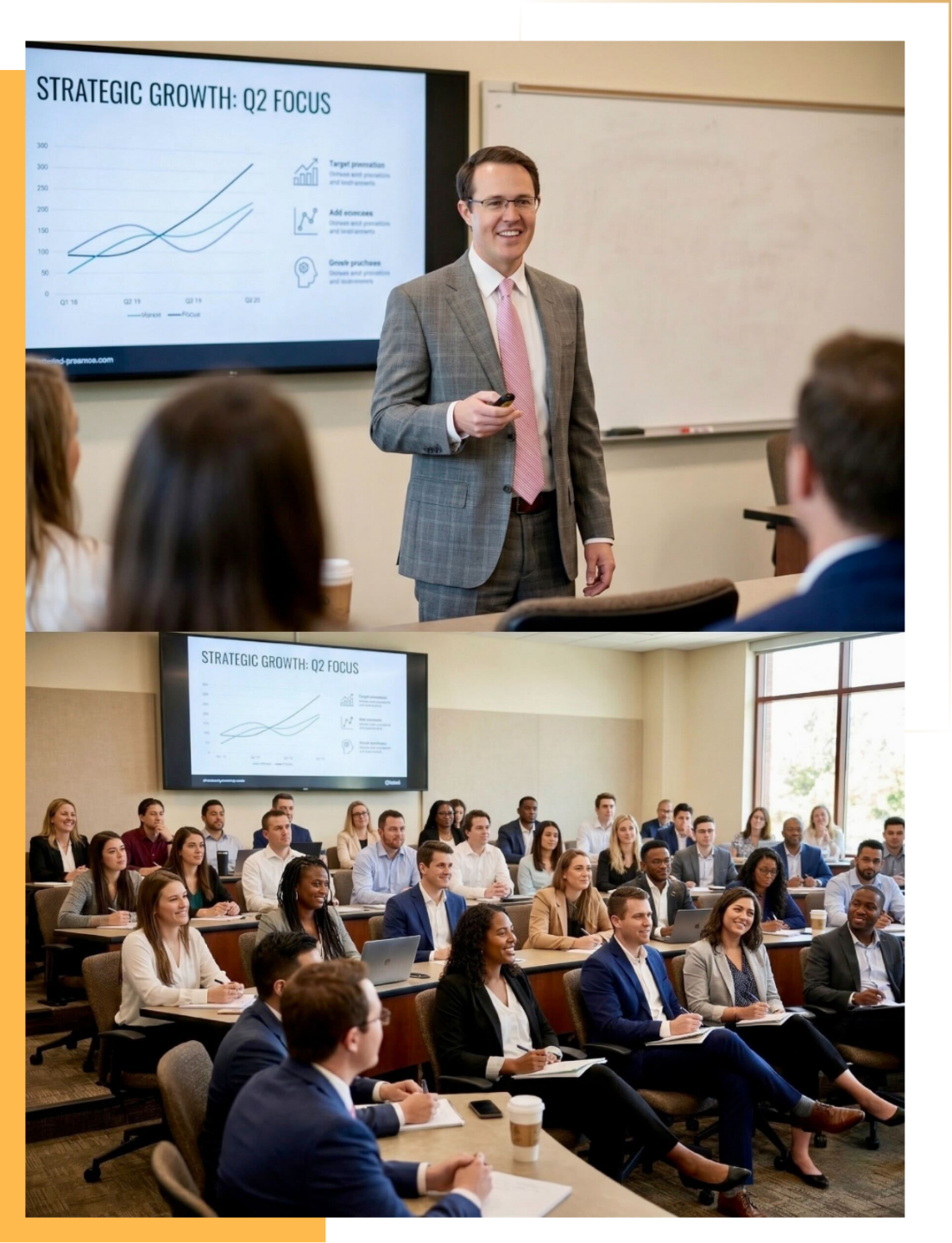
Management Is No Longer Operational
It’s psychological.
The quality of your leadership now determines:
- How long do great people stay
- How honestly does your team communicate
- How quickly does tension get resolved
- Whether accountability strengthens trust or erodes it
- Whether your culture becomes scalable or fragile
Most organizational problems show up behaviorally long after clarity, trust, and emotional safety have already broken underneath them.
And by the time performance visibly drops, the damage is usually expensive.

The Human Manager was built to close that gap.
The hardest part of management is rarely strategy.
It’s navigating the human tension between trust and accountability, autonomy and alignment, performance and emotional sustainability, often in real time, with consequences attached to every decision.
The Human Manager was built for leaders operating inside that reality.
STRENGTHEN HOW YOU LEADThis Was Built for Managers Carrying More
Than Their Job Description
You’ll likely recognize yourself here if:

You manage high-performing people, but feel the emotional complexity of leadership is becoming heavier

You’re tired of organizational noise draining time, clarity, and momentum
You avoid certain conversations longer than you should because the stakes feel high

You’ve dealt with high performers who damage morale while still producing results

Your 1:1s feel transactional instead of useful

You’re trying to build a strong culture without becoming emotionally depleted yourself

You want your team to communicate honestly before problems escalate

You care deeply about performance and equally deeply about people
This isn’t for managers looking for motivational leadership content.
It’s for leaders trying to operate at a higher level of clarity, trust, accountability, and relational intelligence.
The Real Cost of Weak Management Usually Doesn’t Show Up Immediately
It accumulates quietly.
✕In turnover that could have been prevented.
✕In trust that slowly weakens.
✕In emotional fatigue.
✕In meetings where people stay polite instead of being honest.
✕In high performers who stop caring long before they resign.
✕In leaders carrying unnecessary emotional weight because nobody ever taught them how to separate responsibility from over-responsibility.
Most management problems begin as unaddressed relational friction.
Then, eventually becomes an operational problem.
What’s Included

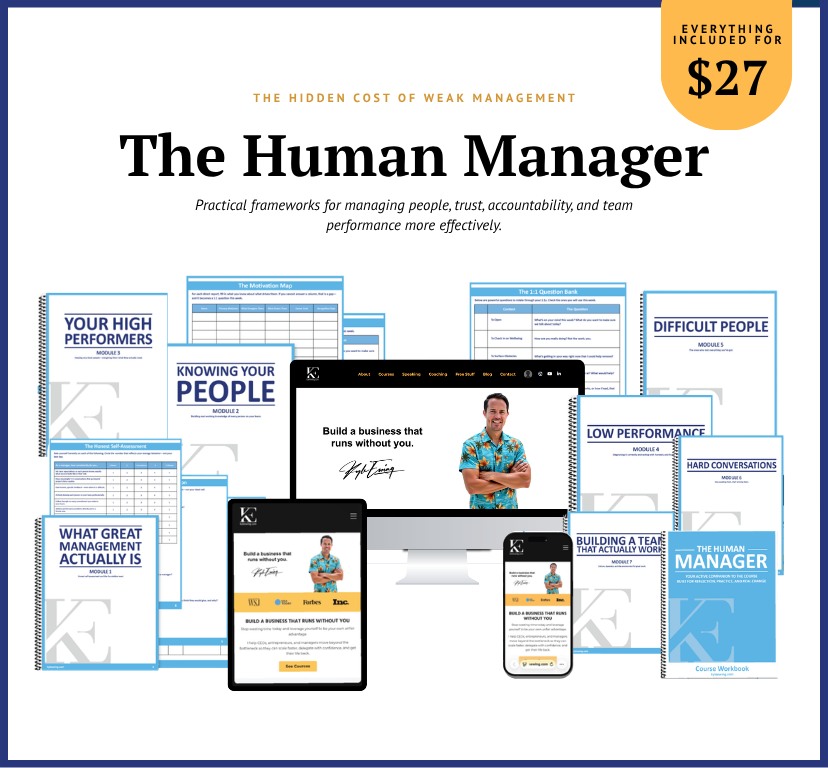
Interactive Workbook
An active reflection and implementation system designed to create behavioral change, not passive consumption.
8 Sequential Leadership Modules
From foundational management psychology to difficult conversations, trust-building, accountability, emotional labor, and self-leadership.
Commitment Tables
Structured implementation prompts with deadlines designed to move insight into action.
Scenario Practice Sheets
Practice navigating real leadership situations before they happen:
- The Brilliant Jerk
- Disengaged Top Performers
- Conflict Avoidance
- Burnout Signals
- Difficult Accountability Conversations
Working Leadership Tools & Frameworks
Including:
- Trust Audit
- Motivation Map
- Psychological Safety Scorecard
- Skill / Will / Clarity / Fit Matrix
- 1:1 Question Bank
- Flight Risk & Burnout Tracker
What Changes When Leadership Becomes Deliberate
Teams begin communicating earlier, tensions get addressed before they become cultural, and accountability becomes clearer because expectations are no longer left unspoken.
High performers feel challenged to grow rather than emotionally drained by constant tension; managers stop carrying responsibility that was never entirely theirs to hold alone; and trust becomes something operationalized through consistent actions and accountability rather than dependent on personality.
Over time, leadership starts to feel less reactive in moments of pressure and more intentional in decision-making — not because the complexity disappears, but because there’s finally a framework for navigating it effectively.
The goal isn’t to become a perfect leader. It’s becoming the kind of manager people consistently perform, communicate, and grow best under.

Questions Smart Managers Usually Ask Before They Buy
I’m already overwhelmed. How long does this take?
Is this leadership theory or practical management training?
What if I already know I need to let someone go?
Can this actually help retain top performers?
What makes this different from traditional leadership courses?
Leadership Eventually Becomes Less About Managing Output
And more about managing clarity, trust, tension, accountability, and human complexity well.
Most people learn that through years of avoidable mistakes.
The Human Manager was built to shorten that learning curve.
LEAD YOUR TEAM MORE INTENTIONALLY$27 • Instant Access • 30-Day Guarantee